GHK-Cu vs AHK-Cu
Two copper peptides that differ by one amino acid: one for skin, one sold for hair
We may earn a commission from links on this page. It never decides our picks. How we make money
For skin, GHK-Cu: it has small human trials and AHK-Cu has none. For scalp hair, neither has human evidence; GHK-Cu has only one small eyebrow trial. Neither wins.
- Wrinkles and firmness: GHK-Cu
- Hair thinning: no winner
- Wounds: GHK-Cu
- Injury or injection: neither
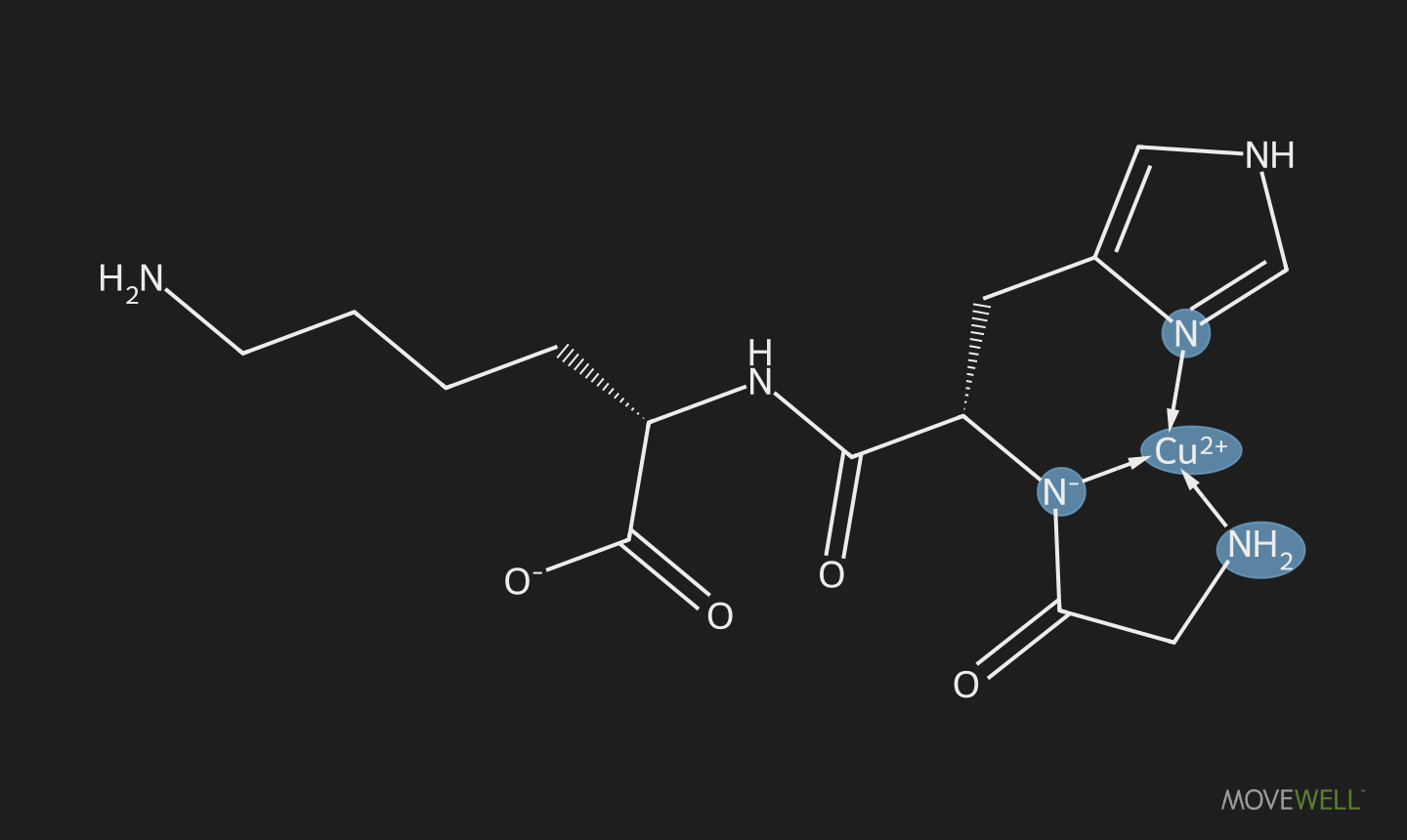
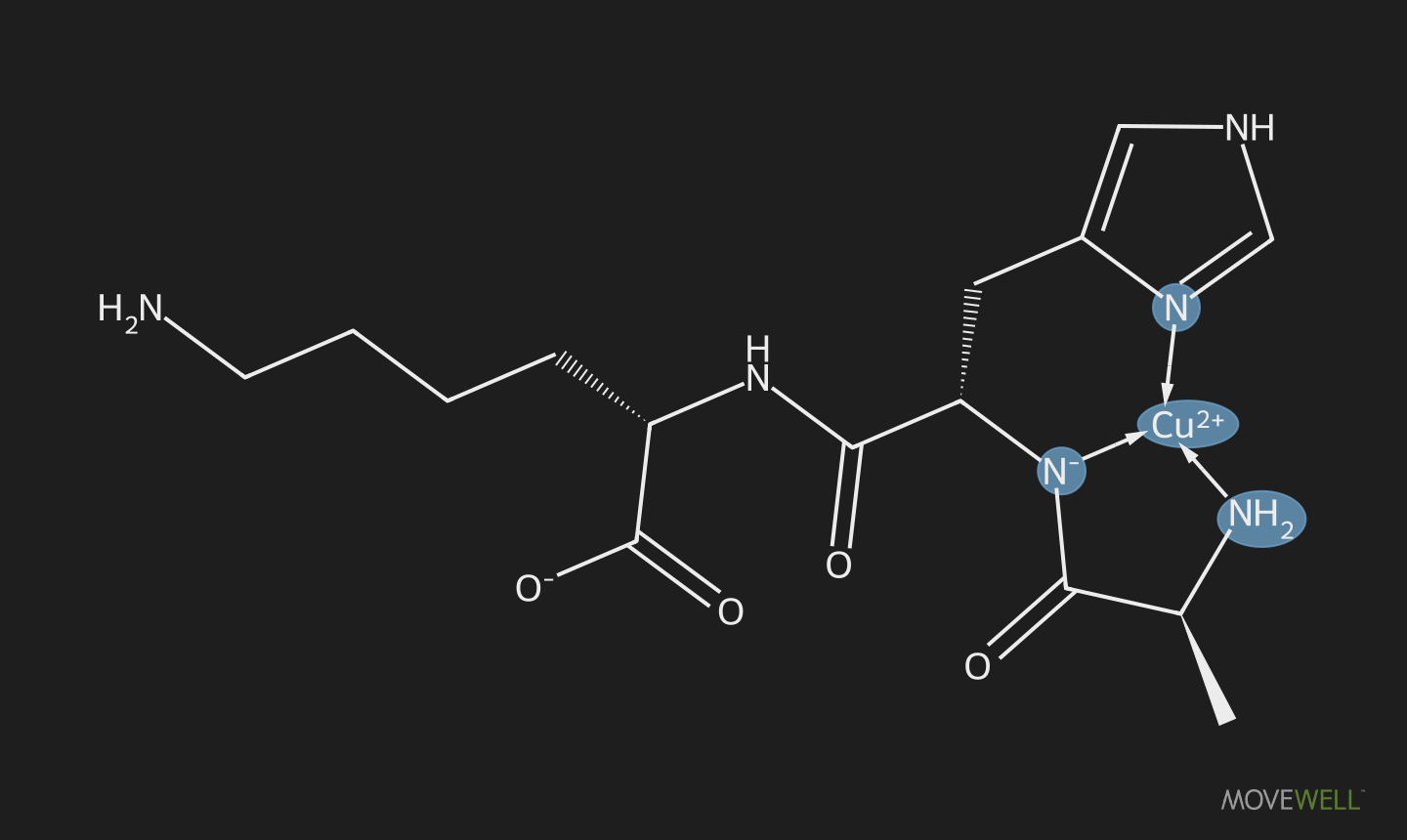
In this guide
At a glance
| GHK-Cu | AHK-Cu | |
|---|---|---|
| What it is | Glycine, histidine and lysine bound to one copper ion. Found in human blood in 1973; products are synthetic1 | The same peptide with alanine in place of glycine, bound to copper. A lab-made variant developed for hair2, 3 |
| Status | Cosmetic ingredient. Topical GHK-Cu is in FDA's Category 1, so licensed pharmacies can compound it. Injectable GHK-Cu has no compounding path11 | Cosmetic ingredient. Not on FDA's published 503A category lists, so pharmacies have no clear basis to compound it11 |
| Evidence | 3/5Limited human, for skin only | 2/5Lab only, for hair |
| Main use | Skin: fine lines and firmness | Hair and scalp |
| Form | Cosmetic serums and creams (label name: copper tripeptide-1); compounded prescription creams | Hair and scalp serums at 1% to 8%, often mixed with GHK-Cu |
| Typical cost | $23 to $69 for a cosmetic serumUnverified; from $55 per 30 g compounded18 | About US$50 to $229 per serum19, 20 |
| Main risks | Skin irritation. A safety panel found it safe at cosmetic strengths. Injected: unknown; FDA flags immune reactions and impurities10, 12 | Unknown. No published safety, irritation or allergy testing found. The cosmetic safety review did not cover it10 |
Evidence scale: 5 FDA-approved, 4 strong human, 3 limited human, 2 animal or lab only, 1 anecdotal. Cosmetic serum prices for GHK-Cu could not be rechecked on brand sites. Currency conversions for AHK-Cu serums are approximate.
Evidence by goal
Each goal is graded separately for each peptide. "No study found" means none turned up in the sources we reviewed.
| Goal | GHK-Cu | AHK-Cu |
|---|---|---|
| Wrinkles and firmness (on skin) | 3/51 published trial in 40 women: wrinkle volume down 55.8% vs plain serum at 8 weeks, plus conference abstracts4, 5 | 1/5None found. Skin claims borrow from GHK-Cu studies |
| Hair growth | 1/5No GHK-Cu scalp-hair trial found. A 45-man trial used a copper-free GHK complex with 5-ALA, so it tests neither peptide9. One small 2026 randomized split-face eyebrow trial (n=18) of 2% GHK-Cu reported more hairs on the treated side25 | 2/51 lab study of human follicles in a dish, plus unpublished mouse data in a patent8, 3 |
| Wound healing | 3/51 trial in diabetic foot ulcers (1994), with gel on the wound6 | No study found |
| Tendon or ligament | 2/51 rat study; the benefit was gone by 12 weeks7 | No study found |
| Injected use | 2/5Animal and lab only. No human study of any injected dose | No study found |
The two have never been compared head to head. Much of GHK-Cu's human skin evidence comes from older studies, possibly industry-linked, that are known mainly from conference abstracts.5
Key differences
- One amino acid apart. AHK-Cu has alanine where GHK-Cu has glycine, which adds one small carbon group. The end that holds the copper is the same.2
- Natural vs lab-made. GHK was found in human blood in 1973.1 AHK-Cu was made by ProCyte, whose patent describes it as a hair-growth agent.3 Both are made synthetically for products.
- Who has human data. GHK-Cu has small human trials for skin and wounds.4, 6 AHK-Cu has none. Its evidence is one lab study on follicles in a dish.8
- The hair-study mix-up. The follicle study often cited for GHK-Cu actually tested AHK-Cu.8 So GHK-Cu has no scalp-hair evidence of its own, only one small 2026 eyebrow trial (n=18),25 and AHK-Cu has only that lab result.
- More isn't clearly better. In the AHK-Cu lab study, follicles grew at very low concentrations and were held back at higher ones.8 Retail serums are far stronger than the range tested.
- Safety record. A cosmetic safety panel reviewed GHK-Cu and found it safe at cosmetic strengths. AHK-Cu was not part of that review, and we found no safety testing for it.10
- Regulation. Topical GHK-Cu can be compounded by licensed pharmacies, and FDA's advisory committee plans to review injectable GHK-Cu before the end of February 2027.11, 13 GHK-Cu was not part of the October 2026 HHS policy for six other peptides.14 AHK-Cu isn't on any published FDA compounding list.11
Can you use both?
It's the most common pairing in hair serums, such as Neurogan (equal amounts) and Hairgenetix (5% AHK-Cu, 10% GHK-Cu). Neurogan says no controlled human trial has tested the combination;15 Hairgenetix says the trials it cites studied the ingredients, not its product.16 Neither peptide has human scalp-hair data on its own (GHK-Cu has one small eyebrow trial25), so a blend adds an untested ingredient to another untested one. Minoxidil and finasteride are the hair-loss treatments with human trials and FDA approval.24
See the AHK-Cu + GHK-Cu hair stack or browse all stacks.
Where to get each
MoveWell sells no peptides. Prices as checked November 1, 2026
| Peptide | Option | Form | Price | Notes |
|---|---|---|---|---|
| GHK-Cu | Superpower | 0.5% GHK-Cu cream, compounded | Members only ($17/mo membership, billed annually); product price not shown17 | Questionnaire and physician review |
| GHK-Cu | Trinova Health | Compounded cream with GHK-Cu, hydroquinone, vitamin C and kojic acid | From $55 per 30 g18 | Online evaluation |
| GHK-Cu | Cosmetic serums | Serums and creams; many don't state strength | $23 to $69Unverified | Compare 8 serums in our GHK-Cu guide |
| AHK-Cu | Neurogan AHK-Cu Hair Serum | 8% AHK-Cu, 60 mL | $22919 | Strongest stated strength we found |
| AHK-Cu | Nubeean Noosa Scalp Serum | 1% AHK-Cu, 30 mL | AUD 7520 | Also contains MSM and trehalose |
| Both | Neurogan AHK + GHK Hair Serum Pro | 2.4 g of each per 60 mL | $18515 | The combination is untested |
Left off: injectable GHK-Cu, which has no compounding path, and "research use only" vials of either peptide, which aren't made or tested for people. More options in the GHK-Cu and AHK-Cu guides.
FAQ
Which is better for hair loss?
Neither has been shown to work in people. AHK-Cu has one lab study on follicles in a dish; GHK-Cu has no scalp-hair study of its own; one small 2026 eyebrow trial (n=18) reported more hairs on the treated side.25 Minoxidil and finasteride are the options with human trials.24
Which is better for skin?
GHK-Cu. It has a 40-person randomized trial and older studies, known mainly from conference abstracts, showing modest gains over 8 to 12 weeks. We found no skin study of AHK-Cu.
Are they the same thing?
Nearly. They differ by one amino acid, alanine in AHK-Cu and glycine in GHK-Cu. They have never been compared head to head, so whether that change matters in people is unknown.
What do the label names mean?
Copper tripeptide-1 is GHK-Cu. AHK-Cu usually appears as copper tripeptide-3 on product labels. "Tripeptide-3" without copper is a different, unrelated ingredient.21, 22
Is a stronger serum better?
Not necessarily. In the only AHK-Cu study, the benefit appeared at tiny concentrations and reversed at higher ones. No one has tested strengths on a scalp.
Are they legal?
Both are sold legally as cosmetic ingredients. Topical GHK-Cu can also be compounded by licensed pharmacies. Injectable GHK-Cu has no compounding path; an advisory committee vote alone wouldn't create one, which takes a rule or a policy like the October 2026 HHS one.23 AHK-Cu isn't on any published compounding list.
References
25 sources, with links
- Pickart L, Thaler MM. Tripeptide in human serum which prolongs survival of normal liver cells and stimulates growth in neoplastic liver. Nature New Biology 1973;243:85–87. Record
- ChEBI 158225, Ala-His-Lys. EBI
- ProCyte Corp. US Patent 6,017,888, Stimulation of hair growth by peptide copper complexes. Google Patents
- Badenhorst T et al. Effects of GHK-Cu on MMP and TIMP expression, collagen and elastin production, and facial wrinkle parameters. J Aging Sci 2016;4:166. DOI 10.4172/2329-8847.1000166
- Pickart L, Vasquez-Soltero JM, Margolina A. GHK peptide as a natural modulator of multiple cellular pathways in skin regeneration. BioMed Res Int 2015:648108. Describes the Leyden, Finkley and Abdulghani studies. PMC4508379
- Mulder GD et al. Enhanced healing of ulcers in patients with diabetes by topical treatment with glycyl-l-histidyl-l-lysine copper. Wound Repair Regen 1994;2:259–69. DOI
- Fu SC et al. Tripeptide-copper complex GHK-Cu (II) transiently improved healing outcome in a rat model of ACL reconstruction. J Orthop Res 2015. DOI 10.1002/jor.22831
- Pyo HK et al. The effect of tripeptide-copper complex on human hair growth in vitro. Arch Pharm Res 2007;30(7):834–9. DOI 10.1007/BF02978833. Tested AHK-Cu. Record
- Lee WJ et al. Efficacy of a complex containing GHK and 5-aminolevulinic acid on hair growth in men with androgenetic alopecia. Ann Dermatol 2016;28(4):438–43. Copper-free. PMC4969472
- Johnson W et al. Safety assessment of tripeptide-1, hexapeptide-12, their metal salts and fatty acyl derivatives, and palmitoyl tetrapeptide-7 as used in cosmetics. Int J Toxicol 2018;37(3 suppl):90S–102S. Link
- FDA. Bulk drug substances nominated for use in compounding under 503A, categories list (updated May 14, 2026). fda.gov
- FDA. Certain bulk drug substances for use in compounding that may present significant safety risks. fda.gov
- FDA. Meeting of the Pharmacy Compounding Advisory Committee (before end of Feb 2027). fda.gov
- BakerHostetler. HHS issues enforcement discretion policy regarding 503A compounding using certain peptide bulk drug substances (Oct 28, 2026). Link
- Neurogan Health. AHK-Cu + GHK-Cu Hair Serum Pro (product page and evidence statement). Link
- Hairgenetix. Copper Peptide Hair Growth Serum (product page and evidence statement). Link
- Superpower. GHK-Cu cream. Link
- Trinova Health. Reju cream. Link
- Neurogan Health. AHK-Cu Copper Peptide Hair Serum 4800mg. Link
- Nubeean Noosa. Copper Peptide AHK-Cu Scalp Serum. Link
- EU CosIng, copper tripeptide-1, ref 55687 (via mirror). Link
- CosIng mirror, tripeptide-3 (a different ingredient). Link
- Holland & Knight. Peptides at a crossroads: what wellness providers need to know (Oct 16, 2026). Link
- Springer K, Brown M, Stulberg DL. Common hair loss disorders. Am Fam Physician 2003;68(1):93–102. AAFP
- Bo SL, Nararatwanchai T, Suppornpun N, Poomarapan K, Thaploka S. The efficacy of 2% copper peptide (GHK-Cu) serum for eyebrow hypotrichosis (vehicle-controlled, split-face). Procedia of Multidisciplinary Research 2026;4(5). Link
This page is for education and is not medical advice. Neither GHK-Cu nor AHK-Cu is FDA-approved as a drug. Talk to a clinician about hair loss or skin concerns before starting any treatment.