Best Workout Mats in 2026, by Use
Workout and yoga mat picks by use, with thickness, material and grip guidance, current specs and prices, and which independent reviewers actually used them.
We may earn a commission from links on this page. It never decides our picks. How we make money
Last verified November 2, 2026. Every spec and price on this page links to the source we checked. Where sources disagree or we couldn't confirm something, we say so.
We have not measured these mats ourselves; hands-on findings come from the named reviewers cited below.
The short answer
Pick a mat by what you do on it. For mixed home workouts, an 8 mm closed-cell mat such as the Nike Training Mat 2.0 gives cushion without feeling squishy1, 2. For yoga, a dense 4 to 6 mm mat grips better and keeps you stable; the Manduka PRO is the long-lasting option and a rubber mat with a polyurethane top grips best when you sweat3, 5, 6. For floor work on sore knees, a 1-inch foam mat is the most cushioned, but it is too soft for standing balance work. If you have a latex allergy, avoid natural rubber mats.
What the evidence can and can't tell you
Exercise mats are not medical devices and are rarely studied. We are not aware of trials comparing mats for injury risk or performance, so this page doesn't grade them. The picks rest on published specs, the materials each mat uses, and independent hands-on reviews by Garage Gym Reviews, OutdoorGearLab and Live Science, named where we use them2, 5, 6. Only OutdoorGearLab reported simple measurements (weight, a compression test and a soaked-mat grip test)6.
How to choose: thickness, material and grip
Thickness
| Thickness | Good for | Trade-off |
|---|---|---|
| About 2 mm | Travel; laying over a studio or hotel mat | Little cushion on hard floors |
| 4 to 6 mm | Yoga and Pilates; standing and balance poses | Firm under knees on hard floors |
| About 8 mm | Mixed home workouts: core, bodyweight, light dumbbells | Slightly less stable for balance poses than a thin dense mat |
| 12 to 25 mm (½ to 1 in) foam | Floor work, stretching, people with sensitive knees or wrists | Sinks under hands and feet; not for jumping or standing balance |
Density matters as much as thickness. A dense 6 mm mat can feel more supportive than a soft 10 mm one. Garage Gym Reviews' tester found the 8 mm Nike mat compressed less than other mats he used2.
Material
| Material | Examples here | Pros | Cons |
|---|---|---|---|
| PVC (closed-cell) | Manduka PRO, Gaiam2, 3 | Dense, durable, easy to wipe; usually latex-free3 | Not biodegradable; can feel slick when sweaty until broken in3 |
| Thermoplastic elastomer (TPE/SBS) | Nike Training Mat 2.01, 2 | Lighter, cushioned, latex-free | Less grip for sweaty yoga than rubber with a PU top |
| Natural rubber with a polyurethane (PU) top | Liforme, IUGA5, 6 | Best grip, including when wet6 | Heavier; contains natural rubber; the top can show wear after years of heavy use6 |
| NBR foam | HemingWeigh 1 in7 | Thick and soft, cheap | Compresses; unstable for standing work |
Grip and size
- Sweaty sessions: a PU-topped rubber mat or a towel over a PVC mat. OutdoorGearLab soaked an IUGA mat with about a liter of water and hands and feet still gripped6.
- Length: most mats are 68 to 72 in long. If you are over about 6 ft, look for a long version, such as the 85 in Manduka PRO3.
- Width: 24 in is standard; 26 in or wider gives more room for wide-stance moves3, 4.
- Weight: if you carry the mat, compare weights. The Manduka PRO is 7.5 lb; the IUGA weighed 2.1 lb in OutdoorGearLab's measurement3, 6.
- Shoes: jumping and dumbbell work in shoes wears thin yoga mats fast. Use a thicker training mat, or rubber gym flooring if you lift heavy.
Picks by use
We picked mats against five fixed criteria. They apply to every brand, whether or not it pays us:
- The thickness and material suit the use (see the tables above).
- The brand or a named retailer publishes the size, thickness and material, and the mat was listed for sale on November 2, 2026.
- Where possible, an independent reviewer has used it, and we name them.
- We give a price only where we checked it on a non-Amazon page on November 2, 2026. For mats we link on Amazon, check the current price there.
- Commission plays no part.
Mixed home workouts: Nike Training Mat 2.0
An 8 mm mat, 72 by 24 in, made of a thermoplastic elastomer (95% styrene-butadiene-styrene) with 5% polyester1. It was $60, marked down from $75, at Sports Unlimited on November 2, 20261. Garage Gym Reviews made it their best overall exercise mat: their tester found it compressed less than other mats and didn't slip on hardwood, although their own spec table lists it as not slip-resistant2. It suits core work, bodyweight circuits and light dumbbells; it's not the grippiest choice for sweaty yoga.
Yoga, for years: Manduka PRO 6mm
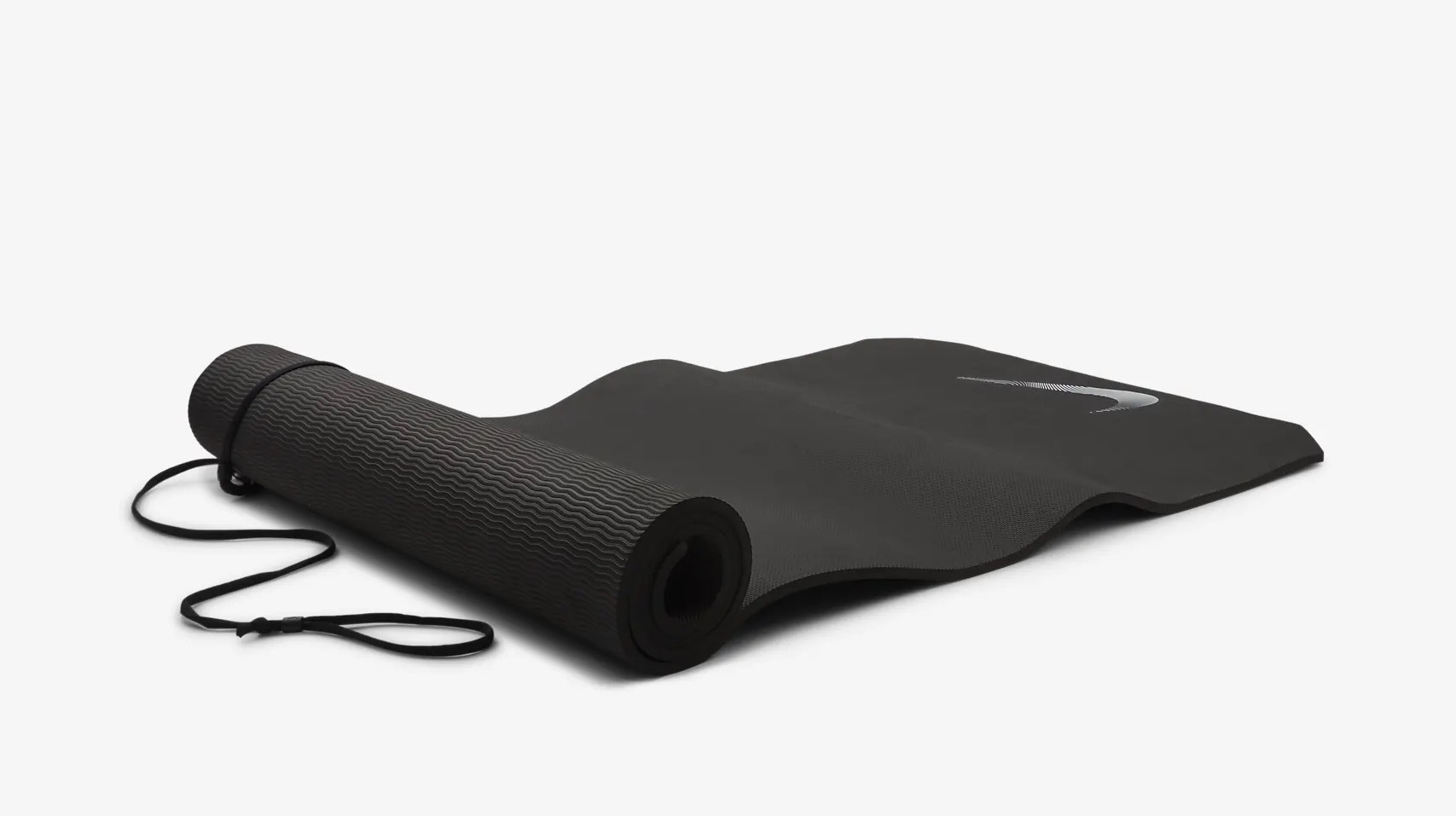
A dense 6 mm PVC mat, 26 in wide, in 68, 71 and 85 in lengths. The standard size weighs 7.5 lb. It is OEKO-TEX STANDARD 100 certified, latex-free, and carries a lifetime guarantee against manufacturing defects. Manduka notes the closed-cell surface can feel slick until it's broken in and suggests a towel for sweaty practice3. It was $144 on manduka.com on November 2, 2026, though the colour we checked was sold out3. Garage Gym Reviews named it best for yoga2. It's heavy to carry.
Grip in sweaty practice: Liforme Classic
Liforme's Classic mat (sold on Amazon as the "Original") is 185 by 68 cm (about 73 by 27 in) and 4.2 mm thick, with a rubber base and a polyurethane top printed with alignment markers4, 5. It weighs about 2.5 kg (5.5 lb)5. Live Science's reviewer used it on several floors and outdoors in summer heat5. Liforme's UK store listed it at £125 and offers a money-back guarantee on mats bought direct4. It's a natural rubber mat, so skip it if you have a latex allergy.
Rubber grip for less: IUGA Pro Non-Slip
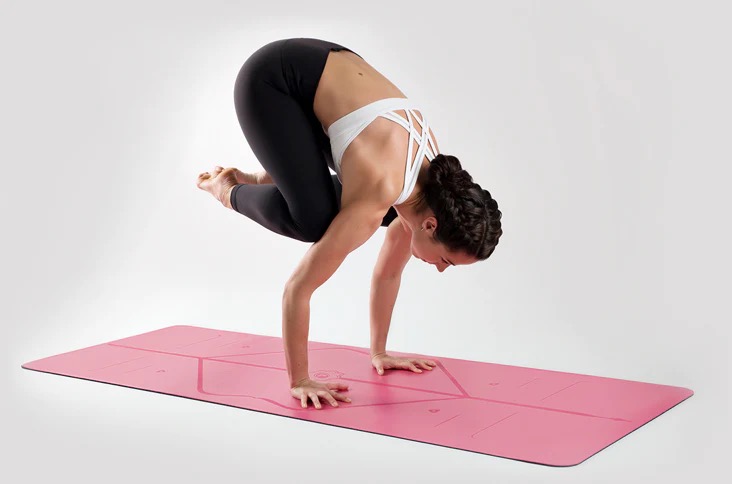
IUGA's non-slip mats use a polyurethane top over rubber, at 72 by 26 in. OutdoorGearLab tested the closely related IUGA Eco-Friendly Non-Slip (5 mm): it weighed 2.1 lb, still gripped when soaked, and compressed about a quarter of its depth under a 40 lb load. They scored grip 7 out of 10 and noted owner reports of flaking after several years of heavy use6. We couldn't confirm that the Pro and the Eco-Friendly are identical, so check the listing's thickness before you buy.
Budget: Gaiam Premium 6mm
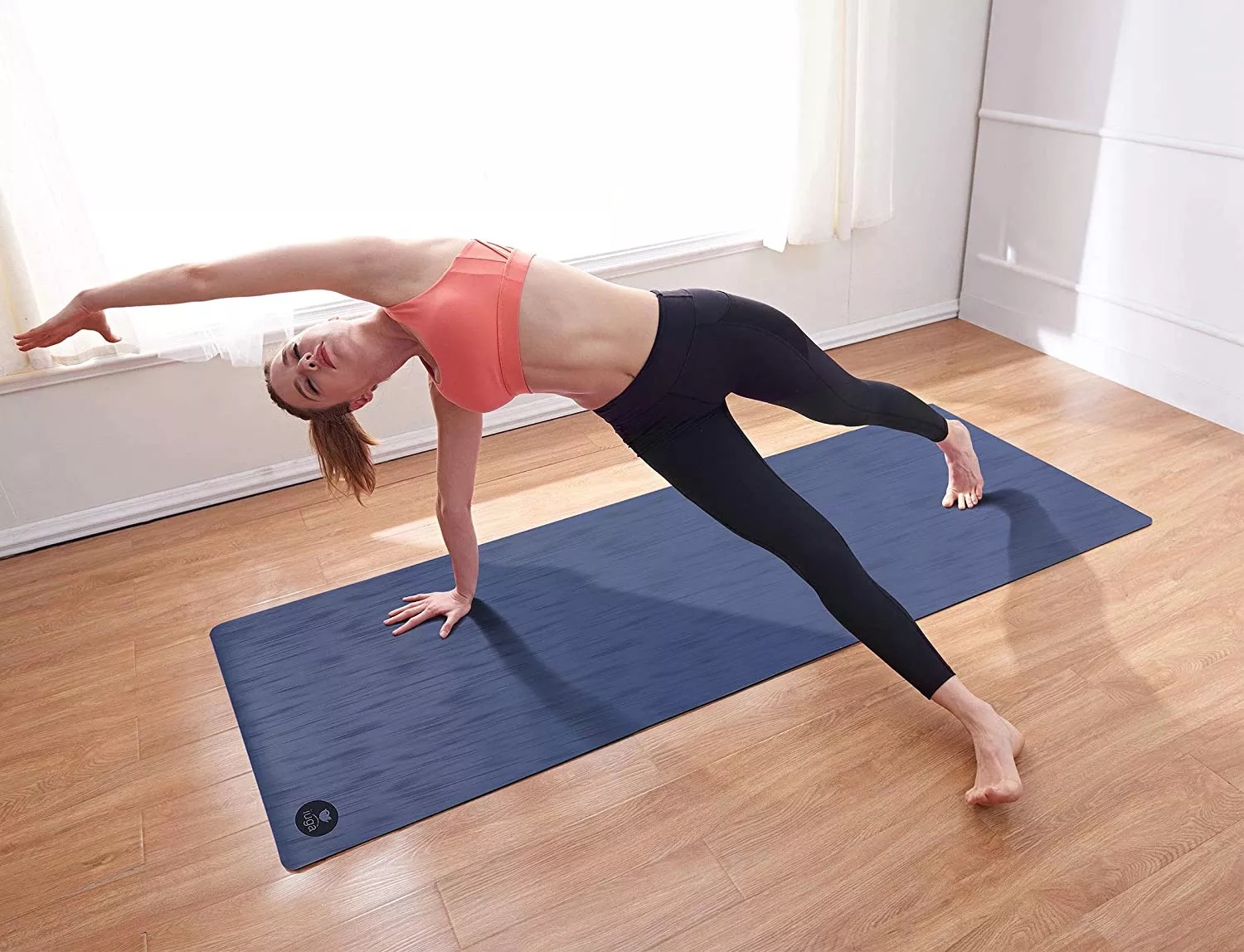
A 6 mm PVC mat, 68 by 24 in, sold in many prints and colours. Specs come from the Amazon listing title; Garage Gym Reviews lists Gaiam's mats as PVC2. It is shorter and narrower than the other picks, so taller people may prefer the Nike or a long Manduka. It's a sensible first mat for light yoga and stretching at home.
Most cushion for floor work: HemingWeigh 1-inch mat
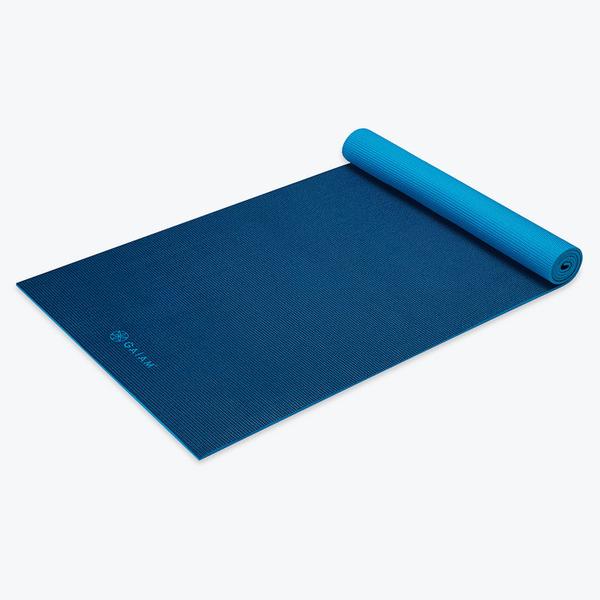
A 1-inch NBR foam mat with a built-in carry strap7. It's meant for floor exercises, stretching and mobility work when a thinner mat hurts your knees, hips or wrists. The listing we checked contradicts itself on size (70 by 23 in and 71 by 24 in) and weight, so treat the specs as approximate7. Don't use it for jumping or standing balance work: thick soft foam moves under you. Garage Gym Reviews' cushioned pick, the REP Exercise Mat, is an alternative at 1.5 in2.
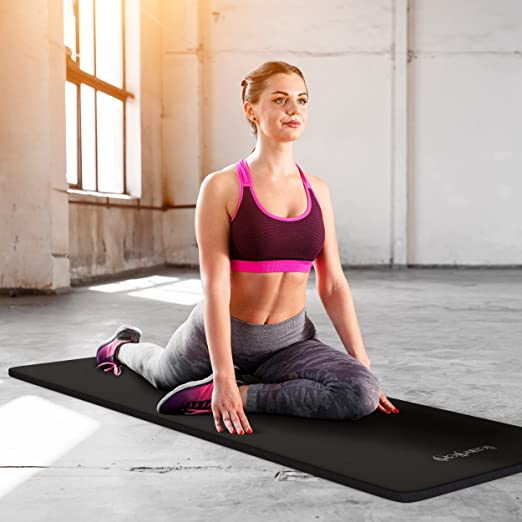
Spec and price table
Price checked November 2, 2026 on the non-Amazon page cited. For Amazon-linked mats we don't show a price; check it on Amazon. Specs are the brand's or retailer's, except where a reviewer measured them.
| Mat | Thickness | Size | Material | Weight | Price | Hands-on reviewer |
|---|---|---|---|---|---|---|
| Nike Training Mat 2.0 | 8 mm | 72 x 24 in1 | TPE (SBS) and polyester1 | Not listed | $60 (Sports Unlimited)1 | Garage Gym Reviews2 |
| Manduka PRO | 6 mm | 68, 71 or 85 x 26 in3 | PVC, OEKO-TEX3 | 7.5 lb (71 in)3 | $144 (manduka.com)3 | Garage Gym Reviews2 |
| Liforme Classic | 4.2 mm | 185 x 68 cm4 | Rubber with PU top5 | About 2.5 kg5 | £125 list (UK store)4; check Amazon in the US | Live Science5 |
| IUGA Pro Non-Slip | Check listing (5 mm for the version tested) | 72 x 26 in6 | PU top over rubber6 | 2.1 lb measured (Eco-Friendly version)6 | Check Amazon | OutdoorGearLab (related model)6 |
| Gaiam Premium 6mm | 6 mm | 68 x 24 in (Amazon listing) | PVC2 | Not checked | Check Amazon | None we could cite |
| HemingWeigh 1 in | 1 in (25 mm) | 70 x 23 or 71 x 24 in7 | NBR foam7 | Listing unclear | Check Amazon | None we could cite |
Safety and care
- Latex allergy: natural rubber mats (Liforme, IUGA) contain latex. Choose PVC, TPE or NBR foam instead; Manduka lists the PRO as latex-free3.
- Slipping: a mat that slides on the floor is a fall risk. Use it on a clean, dry floor, and replace it when the surface gets slick or starts to flake.
- Soft mats and balance: thick foam is for lying, kneeling and sitting work. Stand on a thinner, denser mat.
- Cleaning: follow the maker's care instructions; rubber and PU mats are usually more sensitive to cleaners than PVC.
- Pain: if a thicker mat doesn't stop knee or wrist pain during floor work, get it checked rather than adding padding.
Myths
- "Thicker is always better." Thicker foam is softer, but less stable. That is why yoga mats tend to be thin and dense.
- "Eco-friendly means it lasts." Rubber and PU mats grip well but can wear faster than dense PVC6.
- "A yoga mat works for everything." Shoes, jumping and dumbbells wear thin yoga mats quickly. A training mat or gym flooring handles that better.
FAQ
What thickness should a workout mat be?
About 4 to 6 mm for yoga and Pilates, about 8 mm for mixed home workouts, and ½ to 1 in for floor-only work on sensitive joints.
Is a yoga mat the same as an exercise mat?
Not quite. Yoga mats are thinner and denser for grip and balance. Exercise mats are usually thicker for cushioning during core and bodyweight work.
Which mat material grips best?
Rubber with a polyurethane top, especially when wet6. PVC grips well once broken in, or with a towel3.
Are PVC mats safe?
Look for an independent certification. The Manduka PRO is OEKO-TEX STANDARD 100 certified3. PVC isn't biodegradable, which is an environmental trade-off rather than a safety one.
Can I use a workout mat with dumbbells?
For light dumbbells, yes, on an 8 mm training mat. For heavy weights, use rubber gym flooring; dropped weights damage mats.
How long does a mat last?
It depends on material and use. OutdoorGearLab found owner reports of PU-top flaking after several years of heavy use6. Manduka backs the PRO with a lifetime guarantee against defects, not wear3.
Related guides
- Best foam rollers, by evidence
- Foam rolling exercises
- MoveWell stretching library
- Best massage guns, by evidence
- Best vibration plates, by evidence
References
- Sports Unlimited. Nike Training Mat 2.0 listing: $60.00 (was $75.00), in stock, 24 x 72 in, 8 mm, 95% styrene-butadiene-styrene, 5% polyester. Checked 2 November 2026. Source
- Garage Gym Reviews. Best exercise mats (updated 8 September 2025): Nike Training Mat 2.0 (95% thermoplastic elastomer, compressed less than other mats the tester used), Gaiam yoga mat (PVC), Manduka PRO (PVC, 7.5 lb). Hands-on reviews by GGR's testers; no lab measurements. Source
- Manduka. PRO Yoga Mat 6mm product page: $144, 71/68/85 in long by 26 in wide, 6 mm, 7.5 lb (standard), PVC, OEKO-TEX STANDARD 100, latex-free, lifetime guarantee against defects. Checked 2 November 2026. Source
- Liforme. Yoga mats collection (UK store): Classic Yoga Mat £125 list, 185 x 68 cm, 4.2 mm, money-back guarantee. Checked 2 November 2026. Source
- Downey J. Liforme yoga mat review. Live Science, 19 July 2023: rubber base with polyurethane top, 4.2 mm, 185 x 68 cm, about 2.5 kg; hands-on use on several floors, no measurements. Source
- Pitts K. Iuga Eco-Friendly Non-Slip review. OutdoorGearLab, 17 April 2024: polyurethane top over rubber, 5 mm, 72 x 26 in, 2.1 lb measured; wet-grip and compression tests. Source
- Walmart. HemingWeigh 1" thick yoga mat listing (third-party seller): NBR foam, 1 in, integrated carry strap; the listing gives both 70 x 23 in and 71 x 24 in. Checked 2 November 2026. Source